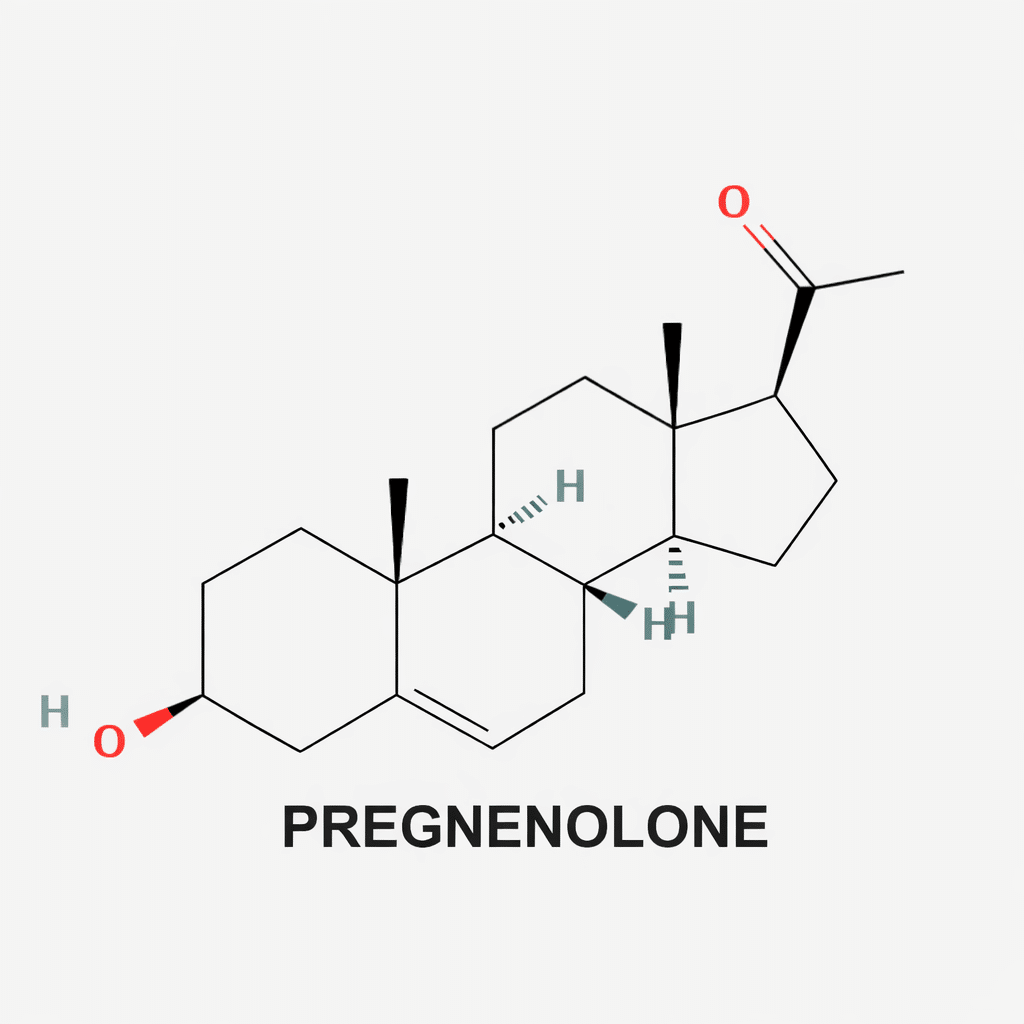
Pregnenolone — realistic assessment
Pregnenolone is a neurosteroid precursor synthesized from cholesterol and converted downstream into progesterone, DHEA, cortisol, and other steroid hormones. It also acts directly in the brain, modulating neurotransmitter systems.
The hype around it is large, but the actual reliable benefits are moderate and context-dependent (dose, baseline hormone levels, age, sex).
Overall Positive Effect Rating
6 / 10 overall
Why not higher?
- Human studies are limited and inconsistent.
- Effects vary widely between individuals.
- Too much can easily produce the opposite of the intended effect.
In people with low neurosteroid levels, chronic stress, or aging-related decline, benefits can feel closer to 7–8/10.
Main Positive Effects
Cognitive Function & Memory
Rating: 7 / 10
Pregnenolone enhances several neural mechanisms:
- NMDA receptor modulation
- Increased acetylcholine release
- Enhanced hippocampal plasticity
- Neurosteroid regulation of synaptic transmission
Observed effects in studies:
• improved working memory
• improved learning performance
• possible protection against cognitive decline
Some trials in schizophrenia and bipolar disorder show modest cognitive improvement.
However, effects in healthy young adults are inconsistent.
Stress Reduction & Mood Stabilization
Rating: 6 / 10
Pregnenolone influences stress through:
- modulation of GABA-A receptors
- regulation of the HPA axis
- downstream conversion into allopregnanolone, a strong calming neurosteroid
Possible benefits:
• reduced stress reactivity
• improved mood stability
• reduced irritability or brain fog
But paradoxically:
High doses may cause
- anxiety
- agitation
- insomnia
Energy & Mental Clarity
Rating: 5 / 10
Indirect effect due to its role as a hormonal precursor.
Some users report:
• increased motivation
• clearer thinking
• less fatigue
However this is not a stimulant effect and depends heavily on hormonal status.
Neuroprotection
Rating: 6 / 10
Animal studies suggest pregnenolone:
- reduces neuroinflammation
- protects neurons from excitotoxic damage
- may slow processes linked to Alzheimer’s disease
Human confirmation is still limited.
Hormonal Support
Rating: 5 / 10
Because pregnenolone sits at the top of the steroid hormone cascade, it can theoretically support:
- progesterone
- DHEA
- testosterone
- cortisol balance
But the body does not always convert it where you want.
Extra pregnenolone can just increase cortisol in some people.
Positive Effects Summary
| Effect | Rating |
|---|---|
| Cognitive support | 7/10 |
| Mood / stress modulation | 6/10 |
| Neuroprotection | 6/10 |
| Energy / mental clarity | 5/10 |
| Hormonal precursor support | 5/10 |
Overall: 6/10
Important Reality Check
Pregnenolone works best when:
- Age >35–40
- Chronic stress or burnout
- Low neurosteroid levels
It works worst when:
- hormones already balanced
- dose too high (>30–50 mg for many people)
High doses often produce:
- irritability
- anxiety
- insomnia
One interesting fact:
Pregnenolone is sometimes called “the memory hormone” because early research showed strong effects on hippocampal learning — but later studies showed the effect is very dose-sensitive.
Pregnenolone — Typical Dosage Range
Pregnenolone dosing varies widely because it acts both as a neurosteroid and a hormone precursor, so the effective dose depends on the goal (cognitive, mood, hormonal support).
Average Supplemental Dosage
| Use Case | Typical Dose |
|---|---|
| General cognitive / mood support | 5–20 mg per day |
| Anti-stress / neurosteroid support | 10–30 mg per day |
| Hormone precursor therapy | 25–50 mg per day |
| Clinical / experimental protocols | 50–100 mg per day (medical supervision usually recommended) |
Practical “Real-World” Average
Most people who supplement pregnenolone regularly settle around:
10–30 mg/day
This range tends to produce noticeable effects without pushing hormone conversion too aggressively.
Why Dose Matters
Pregnenolone has a biphasic response:
- Low doses (5–20 mg)
→ cognitive clarity, calmer mood, mild energy - Moderate doses (20–50 mg)
→ stronger neurosteroid effects, sometimes emotional shifts - High doses (>50 mg)
→ higher chance of- anxiety
- irritability
- insomnia
- hormonal imbalance
This happens because excess pregnenolone may convert into cortisol, progesterone, or androgens, depending on individual enzyme activity.
Timing
Most people take it:
- Morning → avoids sleep disruption
- With food or fat → slightly better absorption
Practical Perspective
In real-world nootropic or hormone-support communities:
- 10 mg → subtle but stable
- 20–30 mg → noticeable mental effect
- 50 mg+ → unpredictable for many users
Important Considerations & Warnings — Pregnenolone
Hormone Precursor
Pregnenolone is a steroid hormone precursor that can convert into several downstream hormones including progesterone, DHEA, testosterone, estrogen, and cortisol. Because of this, individual responses can vary depending on existing hormone balance.
Start with Low Doses
Pregnenolone is biologically active even at low doses. Excessive intake may lead to symptoms related to hormone imbalance such as:
- Irritability or agitation
- Headaches
- Restlessness or insomnia
- Mood swings
- Acne or skin changes
Starting with a low dose and increasing gradually is generally recommended.
Effects on Mood and the Nervous System
As a neurosteroid, pregnenolone may influence brain signaling pathways including GABA and glutamate systems. Some individuals may experience increased alertness or stimulation, particularly at higher doses.
For this reason, it is typically taken earlier in the day to avoid sleep disturbances.
Hormone-Sensitive Conditions
Pregnenolone should be used cautiously or avoided in individuals with hormone-sensitive conditions, including:
- Hormone-sensitive cancers (breast, ovarian, prostate)
- Endometriosis
- Severe hormonal imbalance disorders
Consultation with a qualified healthcare professional is recommended in these cases.
Pregnancy and Breastfeeding
Pregnenolone should not be used during pregnancy or breastfeeding, as its hormonal effects have not been adequately studied in these populations.